
Compressed air is one of the most energy-intensive utilities inside industrial facilities. In large campuses and multi-building operations, centrifugal air compressors often represent millions of dollars in lifetime operating costs. Yet many industrial compressed air systems are still operated based on legacy configurations, incomplete data, or rules of thumb that no longer match production realities.
Rasmussen Air & Gas Energy applies a phased, engineering-driven audit model that reduces risk, leverages existing plant data, and builds toward measurable energy and reliability improvements. The outcome is not simply a report; it is a clear, defensible roadmap for system optimization.
Key Takeaways: Centrifugal Air Compressor Audit
What is it?
A structured, data-driven evaluation of your industrial compressed air system to identify energy waste and improve equipment performance and reliability.
Why does it matter?
Even minor inefficiencies in large systems can force compressors into unstable turndown zones, quietly translating into six-figure annual energy waste.
What does it involve?
A phased approach begins with a remote Phase 0 data review. If needed, this is followed by Phase 1, which involves field measurements and validation. Finally, Phase 2 entails an engineering analysis to develop a roadmap to optimize energy use in the air system and determine the precise return on investment (ROI).
Why a Centrifugal Air Audit Matters
Centrifugal air compressors are highly efficient when operating at design conditions. In real-world facilities, however, they frequently operate in suboptimal regions due to fluctuating demand and control limitations.
Common conditions that an air audit uncovers include:
• Minute-by-minute demand swings that force compressors into unstable turndown zones
• Oversized machines operating far from their best efficiency point
• Inefficient base trim strategies
• Aging equipment consuming excessive power
• Control transitions that create unnecessary load/unload events
Without a structured, data-driven compressed air audit, these issues quietly translate into six-figure annual energy waste. A professional audit provides quantified energy-saving opportunities, verified power-consumption modeling, optimized compressor sequencing strategies, control stability analysis, and reduced operational risk for aging assets. Most importantly, it provides the ROI justification required for capital upgrades.
Step-by-Step: Our Centrifugal Compressor Audit Services
Not every facility requires the same depth of analysis on day one. Some plants already have master controllers and permanently installed flow instrumentation, while others require field validation and temporary measurement equipment. Our phased model ensures that the audit tactics are ideal for your existing setup and that effort matches complexity.
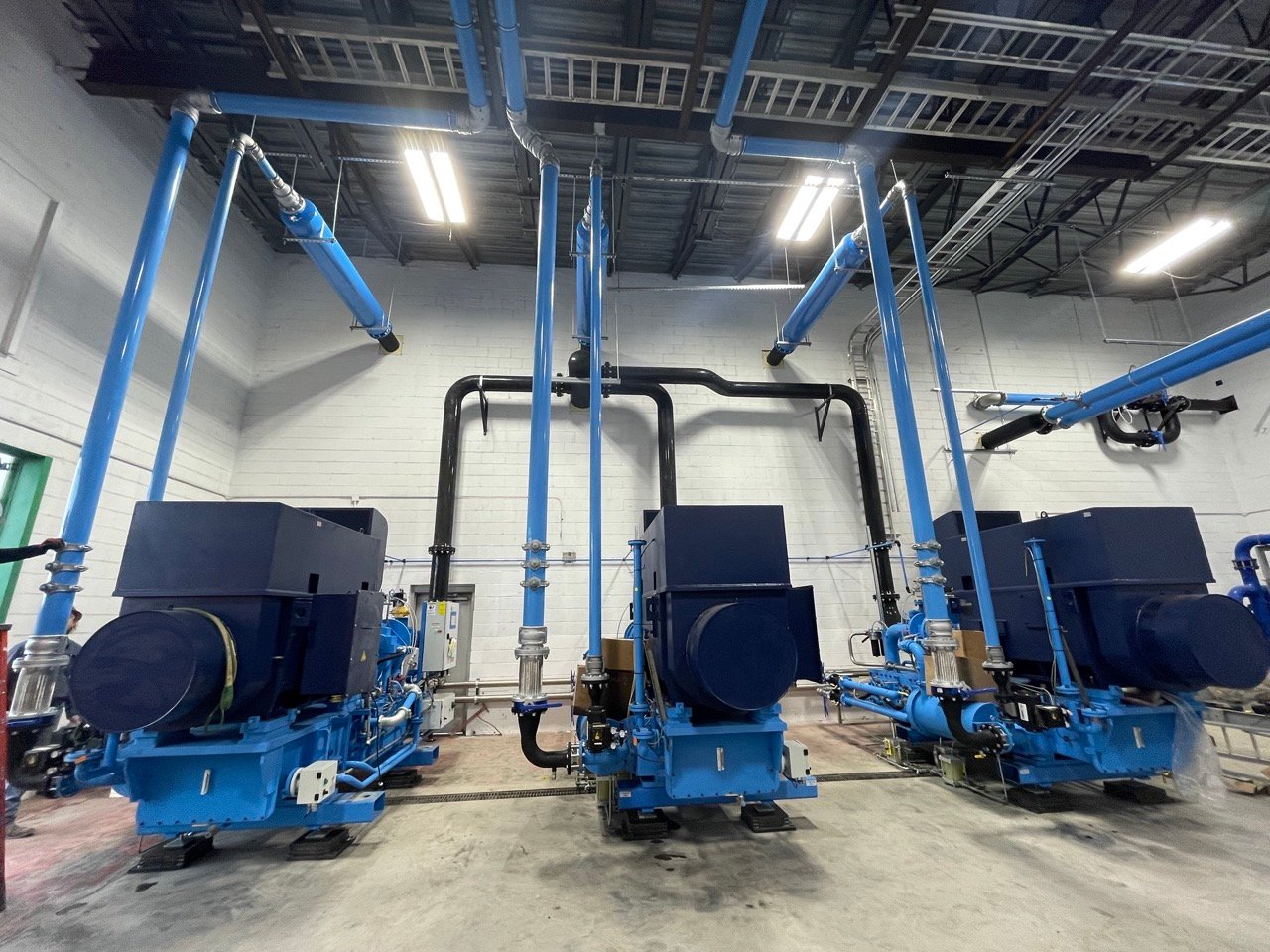
A Structured, Phased Approach to Industrial Compressed Air Optimization
Air Audit Phase 0: Data Review and Opportunity Screening
Phase 0 is designed for facilities that already collect meaningful operating data. The customer provides historical flow, pressure, and power information from permanently installed instrumentation, meaning no site visit is required.
We analyze up to one full year of data, often including both 1-minute and 15-minute interval trends. This enables us to define:
• Average flow demand representing the majority of operating hours
• Peak demand periods tied to production surges
• Compressor loading patterns and utilization rates
• Seasonal demand fluctuations
In a recent large-campus evaluation, one year of plant flow data was reviewed and trended to establish both average and peak cases, similar to the flow history visualization shown in a typical audit report.
The phase 0 audit typically leads to one of three outcomes:
- The existing data is sufficient to complete full modeling and economic analysis.
- Instrumentation gaps are identified, requiring additional pressure or flow measurement.
- A targeted Phase 1 site visit is recommended, but with a sharply defined scope.
This structured entry point reduces risk while demonstrating clear analytical value.
Air Audit Phase 1: Field Measurement and System Validation
If Phase 0 reveals insufficient resolution or questionable measurement accuracy, Phase 1 includes a focused site engagement.
This may involve installing calibrated temporary flowmeters, verifying compressor power measurements, validating sensor placement, and installing additional pressure transmitters at critical nodes.
The objective is not to collect more data for the sake of it. The objective is to eliminate blind spots in the design and operation of compressed air systems, so that engineering decisions are based on verified information.
Air Audit Phase 2: Engineering Analysis and Modeling
With validated data, Rasmussen Air & Gas Energy performs detailed centrifugal compressor modeling.
For each machine, we develop a flow to power model using field measurements and manufacturer performance data. Power curves are linearized across the available turndown range to simulate real operating conditions. An example of this best-fit power modeling approach is shown in the compressor performance appendix of a recent audit.
We then define multiple operating cases, typically including:
• Case 1: Average flow demand
• Case 2: Peak flow demand
For each case, we simulate multiple system configurations such as:
• Existing compressors only
• Addition of one high efficiency centrifugal compressor
• Addition of two high efficiency centrifugal compressors
• Base trim sequencing strategies
• Load sharing strategies
Each scenario is evaluated for total annual power consumption, energy cost impact, and projected savings versus baseline. In one modeled analysis, scenario comparisons demonstrated six-figure annual savings relative to the existing operation.
Control Stability and Transition Analysis
 Energy optimization must be balanced with reliability. Excessive compressor starts and stops create maintenance exposure and operational risk. Using one year of demand data, we model load and unload thresholds to estimate transition frequency. For example, analysis in a recent study projected approximately five load/unload transitions per day under certain configurations.
We then evaluate control logic options including:
• Timer-based unload strategies
• Base trim optimization
• Load sharing control
• Master controller integration
This ensures centrifugal air compressors operate within stable turndown boundaries while minimizing hunting and unnecessary cycling.
Phased Air Audit: What You Receive & The Business Impact
A Rasmussen Air & Gas Energy centrifugal air compressor audit delivers a comprehensive engineering report detailing plant layout analysis, building-level flow mapping, compressor modeling, scenario comparisons, and clear upgrade recommendations.
We explain not only what to do, but also why, when, and what performance outcomes to expect. This means you will receive data-backed projections for annual kWh reductions, cost savings, and estimates for capital payback.
For facilities operating 8,760 hours per year, even a modest efficiency improvement produces a significant financial return.
A properly engineered centrifugal air audit can deliver:
• 5% to 20% energy reduction
• Six-figure annual savings in large systems
• Improved compressor availability and extended equipment life
• Lower total lifecycle cost and reduced carbon footprint
Ideal candidates for this level of analysis typically include facilities with multiple centrifugal air compressors, installed capacity exceeding 1,000 HP, fluctuating demand profiles, or those actively undergoing capital planning.
Schedule Your Audit with Rasmussen Air & Gas Energy
Rasmussen Air & Gas Energy combines deep centrifugal compressor expertise with advanced performance modeling, control system optimization knowledge and turnkey implementation capability. We do not treat audits as academic exercises; we design solutions, support procurement discussions, and remain engaged through deployment and long-term service.
If your industrial compressed air system represents one of your largest energy expenses, a phased centrifugal air audit provides clarity, quantified savings, and a clear path forward.
Schedule your audit today to begin and build a roadmap toward measurable energy optimization and long-term reliability.
Rasmussen Air and Gas Energy manufactures, rents, sells, and services industrial air compressor systems and compressed gas equipment. We support food and beverage, healthcare, manufacturing, agriculture, and other energy intensive industries with engineered compressed air system design, deployment, and lifecycle solutions that maximize productivity and manage flow for measurable financial performance.