
10 Steps to Prepare Your Compressed Air System for Winter
Compressed air is often referred to as the fourth utility because of its critical role in modern manufacturing. It powers everything from production equipment to automation systems, enables packaging operations, and drives countless industrial processes every day. Yet despite its importance, compressed air demand is rarely constant.
Because production schedules change, equipment cycles on and off, and facilities expand, even experience demand fluctuations. Over time, this intermittent demand can significantly impact the efficiency, reliability, and overall operating costs of compressed air systems.These fluctuations are not necessarily signs of a poorly designed system; in fact, they are common in successful manufacturing operations that continue to grow and evolve. The challenge is understanding how this changing compressed-air demand profile affects your industrial air compressors and identifying opportunities to optimize the infrastructure that supports your production.
What Causes Intermittent Compressed Air Demand?
In most industrial environments, compressed air demand rises and falls continuously. This intermittent demand is a natural byproduct of dynamic manufacturing processes.
Common causes of these fluctuations include:
- Automated equipment cycling during production
- Pneumatic conveying systems operating in batches
- Packaging lines experiencing variable throughput
- Pneumatic tools used intermittently
- Blow-off applications with short-duration demand spikes
- Shift changes and production schedule variations
When evaluating their compressed air systems, many facilities focus primarily on compressor capacity. While questions about installed horsepower, the number of available compressors, and backup capacity are important considerations, they only tell part of the story.
.png?width=640&height=269&name=Demand_Flow_Chart%20(1).png)
The more important question is often: How does the facility actually consume compressed air throughout the day? The demand fluctuations listed above create a dynamic operating environment that can heavily influence pressure stability, compressor operation, energy consumption, and overall system performance.
Why Demand Variability Exists in Well-Run Plants
One common misconception is that demand variability indicates a problem. In reality, intermittent compressed air demand is often a natural consequence of efficient production operations.
As facilities grow, they frequently:
- Add new production lines
- Increase automation
- Expand operating hours
- Introduce new products
- Modify manufacturing processes
Because of these changes, a compressed air system design that was properly sized several years ago may now be supporting a significantly different compressed air demand profile. This evolution is entirely normal.
The opportunity lies in periodically reassessing system performance to ensure the compressed air infrastructure continues to align with operational requirements. Leading manufacturers recognize that compressed air systems should evolve alongside production demands rather than remain static.
The Hidden Energy Cost of Fluctuating Air Demand
Compressed air remains one of the most expensive utilities in manufacturing. Industry studies consistently show that energy represents the largest component of compressed air lifecycle cost, often accounting for 70 percent or more of total ownership costs over the life of the equipment.
When demand fluctuates significantly, systems often compensate in ways that harm compressed air system efficiency and increase energy consumption.
Common responses include:
- Increasing system pressure
- Adding compressor capacity
- Operating additional compressors during peak periods
- Maintaining larger pressure bands
These actions may successfully address production concerns, but they can also increase operating expenses. For example, industry guidance frequently cites that increasing system pressure by just 2 psi can increase energy consumption by approximately 1 percent.
While a small pressure adjustment may seem insignificant, the cumulative impact over thousands of operating hours becomes substantial. Over a year of continuous operation, this minor adjustment can translate to thousands of dollars in unnecessary electricity costs for a typical industrial facility. Understanding actual demand patterns helps facilities identify opportunities to improve efficiency without sacrificing production reliability.
How Intermittent Demand Impacts Pressure Stability and Reliability
Consistent pressure is critical for many manufacturing processes.
When significant demand events occur, facilities may experience:
- Temporary pressure drops
- Reduced equipment performance
- Product quality variations
- Process interruptions
- Operator concerns
In many cases, organizations assume additional industrial air compressor capacity is required. However, the root cause is often related to system dynamics rather than insufficient generation capacity.
A facility may have adequate compressor capacity overall but lack the storage, controls, or distribution infrastructure necessary to manage short-duration demand spikes effectively. Understanding when these events occur and how the system responds is essential for making informed decisions.
Avoiding "The Capacity Trap" in Industrial Air Compressors
A common pattern emerges in growing manufacturing facilities: a production issue occurs, pressure drops are observed, and additional compressor capacity is installed.
Several years later, demand increases again, and another compressor is added.
Over time, facilities can accumulate multiple compressors operating under different control strategies, with varying efficiencies and overlapping operating ranges. This situation is often referred to as the "capacity trap". The facility appears to have plenty of installed horsepower, yet pressure concerns, energy consumption, and reliability issues may still persist.
However, this problem is not necessarily due to the compressors themselves. The real problem lies in the decisions made regarding the system, which were not based on a full understanding of how the compressed air demand profile was evolving. A system-focused approach often reveals opportunities to improve performance without merely adding more equipment.
Why Compressed Air Storage Matters for System Efficiency
Storage plays a critical role in managing intermittent demand. Compressed air storage tanks, or air receivers, act as energy reservoirs within the industrial compressed air system. When demand suddenly increases, stored compressed air can supply the required airflow while compressors respond to changing conditions.
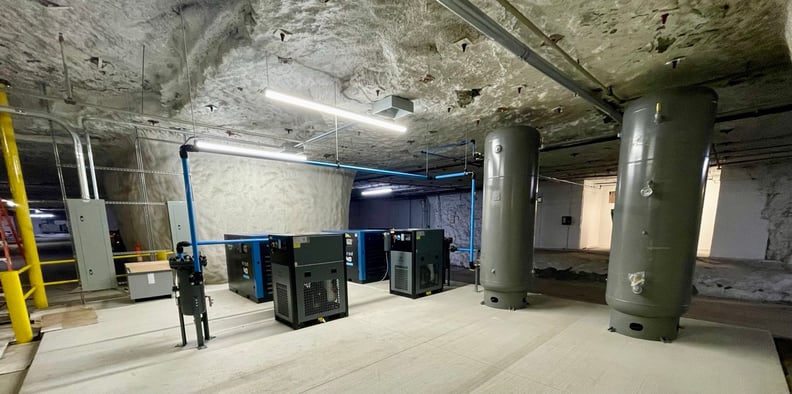
Benefits of properly applied storage include:
- Improved pressure stability
- Reduced compressor cycling
- Lower peak demand stress
- Enhanced system efficiency
- Extended equipment life
Many facilities are surprised to discover that strategic storage improvements can produce measurable performance gains without increasing installed compressor capacity. However, the effectiveness of storage depends not only on volume but also on placement within the compressed air system. Proper engineering is essential to maximize its value.
From Compressor-Centric Thinking to System-Centric Thinking
Historically, compressed air discussions often focused on compressor size and horsepower. Today, leading manufacturers increasingly view compressed air as an integrated system.
This system includes:
- Air generation
- Storage
- Air treatment
- Distribution piping
- Controls
- Demand-side consumption
- Energy management
A larger compressor does not automatically solve a system problem.
In many cases, improvements in controls, storage, piping design, leak management, or demand-side practices can deliver significant performance improvements.
This system-centric approach helps facilities improve reliability while making better use of existing assets. It also aligns with modern energy management and sustainability initiatives that prioritize operational efficiency and resource optimization.
The Value of Compressed Air Assessments and CAGI Verification
One of the most important principles in compressed air management is making decisions based on data rather than assumptions. Organizations such as the Compressed Air & Gas Institute (CAGI) have long supported performance verification practices and assessment methodologies designed to provide objective information about compressed air system operation.
CAGI's Performance Verification program was developed to provide standardized, third-party validated performance data for compressed air equipment, helping end users make more informed decisions based on measurable operating characteristics rather than assumptions.
While equipment performance is important, the greatest opportunities often emerge when that same data-driven philosophy is applied across the entire compressed air system.
Rather than relying solely on perceived demand or anecdotal observations, performance verification and a professional compressed air assessment focus on measurable operating conditions.
Key areas during a comprehensive air demand analysis often include:
- Airflow demand
- Pressure stability
- Compressor loading characteristics
- Energy consumption
- Air quality requirements
- System utilization
- Storage performance
- Distribution efficiency
The goal is not simply to identify problems. The goal is to understand how the system operates under real-world conditions and to determine whether opportunities for improvement exist. At Rasmussen Air & Gas Energy, this same philosophy guides compressed air system assessments. Data-driven analysis provides the foundation for informed recommendations and long-term performance improvements.
Common Findings During Compressed Air Audits
Every facility is unique, but several recurring themes often emerge during industrial compressed air audits.
%20Medium.jpeg?width=340&height=453&name=Church_and_Dwight_New_Equipment_Start_Up_0fa89249%20(1)%20Medium.jpeg) Excessive Operating Pressure
Excessive Operating Pressure
Systems may be operating at higher pressures than production equipment actually requires.
Inadequate Storage Capacity
Demand spikes may be placing unnecessary stress on compressors due to insufficient storage.
Artificial Demand
Leaks, inappropriate pressure settings, and inefficient air use practices can increase consumption.
As commonly cited by CAGI, the U.S. Department of Energy, and compressed air industry best practices, unmanaged leaks can account for 20 to 30 percent of compressed air production in many facilities.
Compressor Control Challenges
Multiple compressors may not be sequenced optimally, leading to inefficient operation.
Unidentified Demand Events
Specific production processes may be creating significant short-duration demand spikes that have never been measured or analyzed.
These findings are not unusual; they are often characteristics of systems that have evolved alongside successful manufacturing operations.
These issues also align with broader industry benchmarks that many facilities use to evaluate their compressed air system performance.
Industry Benchmarks Every Plant Should Know
While every compressed air system is unique, several widely recognized benchmarks can help facilities evaluate performance.
- Energy typically represents the largest portion of compressed air lifecycle costs.
- Compressed air leaks can account for 20 to 30 percent of production in some facilities.
- Increasing system pressure can significantly impact energy consumption.
- Demand-side improvements often provide some of the fastest returns on investment.
- Data logging and system assessments frequently identify opportunities that are not visible through routine observation alone.
These benchmarks highlight why system assessments have become a valuable tool for manufacturers focused on reliability, efficiency, and long-term operational performance.
Turning Demand Variability Into an Operational Advantage
Intermittent demand should not be viewed as a problem to eliminate; instead, it should be viewed as information. Demand variability provides insight into how a facility operates, where resources are consumed, and where opportunities for improvement may exist.
Facilities that understand their compressed air demand profile are often better positioned to:
- Improve pressure stability
- Reduce energy consumption
- Increase equipment reliability
- Extend compressor life
- Delay unnecessary capital expenditures
- Support future production growth
Ultimately, the key is understanding the relationship between demand, supply, storage, controls, and distribution.
How Rasmussen Air & Gas Energy Optimizes Compressed Air Systems
Rasmussen Air & Gas Energy works with manufacturers across diverse industries to evaluate and optimize compressed air systems. Our team helps organizations move beyond equipment-focused conversations and adopt a system-wide perspective that considers:
%20Medium.jpeg?width=290&height=387&name=Technical%20training-%20Brian%20Carty%20and%20Carson%20Dudley%20(1)%20Medium.jpeg) Demand profiles
Demand profiles- Air quality requirements
- Storage capacity
- Compressor controls
- Distribution systems
- Energy performance
- Future growth objectives
Whether the goal is to improve reliability, reduce operating costs, increase production capacity, or plan for expansion, a data-driven assessment provides the foundation for informed decision-making. Compressed air is too important to manage through assumptions alone.
Schedule Your Compressed Air System Assessment
Do you know how your compressed air system actually performs throughout a production day? Many facilities are surprised by what the data reveals.
Rasmussen Air & Gas Energy can perform a comprehensive compressed air system assessment to evaluate demand patterns, identify improvement opportunities, and help ensure your compressed air infrastructure supports long-term operational success.
Contact Rasmussen Air & Gas Energy today to schedule a compressed air system assessment and discover what your compressed air demand profile is telling you.
Rasmussen Air and Gas Energy manufactures, rents, sells, and services industrial air compressor systems and compressed gas equipment. We support food and beverage, healthcare, manufacturing, agriculture, and other energy intensive industries with engineered compressed air system design, deployment, and lifecycle solutions that maximize productivity and manage flow for measurable financial performance.