How to Choose Between a Refrigerated and Desiccant Air Dryer
Modern automotive manufacturing depends on reliable compressed air to keep production moving. Because it supports nearly every stage of vehicle production, from robotic assembly and automated tooling to paint finishing and quality inspection, compressed air is often referred to as the "fourth utility" alongside electricity, water, and natural gas.
Unlike other utilities, however, compressed air is generated entirely on-site. This makes strategic compressed air system design, precise equipment selection, and ongoing maintenance essential to maintaining manufacturing efficiency.When an industrial compressed air system is engineered correctly, manufacturers benefit from higher product quality, improved equipment reliability, reduced downtime, and significantly lower operating costs. Conversely, inadequate air quality, unstable pressure, or inefficient system design can quickly create production bottlenecks that negatively affect both facility profitability and customer satisfaction.
Where Compressed Air Is Used in an Automotive Plant
Automotive facilities rely on engineered automotive compressed air systems across a wide range of critical production processes, including:
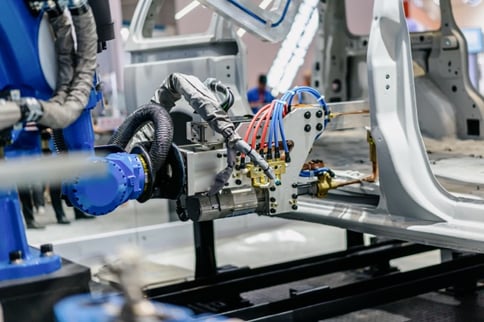 Robotic Assembly
Industrial robots utilize pneumatic actuators for gripping, positioning, clamping, and automated motion. Maintaining stable pressure ensures repeatable precision while minimizing production defects.
Paint Operations
Paint quality depends heavily on clean dry air (CDA). Moisture, oil aerosols, or particulate contamination can cause fisheyes, poor adhesion, inconsistent finishes, and costly rework.
Pneumatic Assembly Tools
Torque tools, grinders, drills, impact wrenches, and fastening systems require consistent air pressure to maintain repeatable performance and assembly quality.
Leak Testing
Compressed air leak testing is commonly used on critical automotive parts like fuel systems, HVAC components, battery assemblies, and cooling systems. Stable pressure improves testing accuracy and reduces false failures.
Material Handling and Automation
Compressed air powers automated handling systems, conveyors, pneumatic cylinders, lift assists, and packaging equipment throughout the production facility.
The Impact of Compressed Air on Production Performance
How Air Quality Directly Affects Product Quality
One of the most overlooked factors in manufacturing performance is compressed air quality. Contaminants such as moisture, oil carryover, rust particles, pipe scale, dirt, and condensation can negatively affect production equipment while introducing defects into finished products. For automotive manufacturers, maintaining the appropriate compressed air quality is essential for protecting sensitive equipment, ensuring consistent product quality, and meeting production specifications.
The internationally recognized ISO 8573-1 standard establishes compressed air quality classes based on particulate contamination, water content, and oil content. Selecting the appropriate ISO 8573 air quality class depends on the application. Paint systems, precision instrumentation, battery manufacturing, and leak testing often require significantly cleaner air than general pneumatic tools.
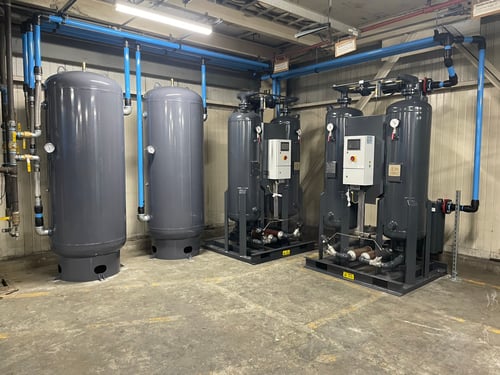
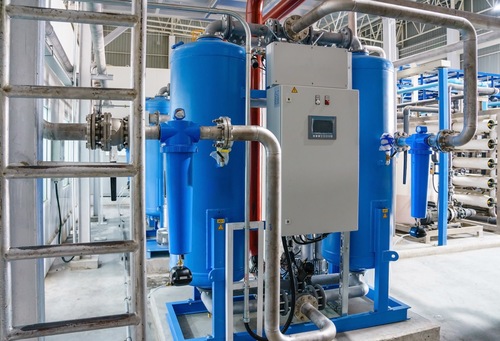
Proper compressed air system design is required to achieve these targets. A well-engineered system typically includes:
- Refrigerated or desiccant dryers
- High-efficiency coalescing filters
- Particulate filters and moisture separators
- Condensate management
- Routine air quality monitoring
Together, these components help deliver compressed air that meets the required ISO 8573-1 air quality classification for each manufacturing process, reducing defects while protecting downstream equipment.
How Stable Pressure Improves Manufacturing Consistency
Pressure fluctuations often create problems that appear unrelated to the compressed air system.
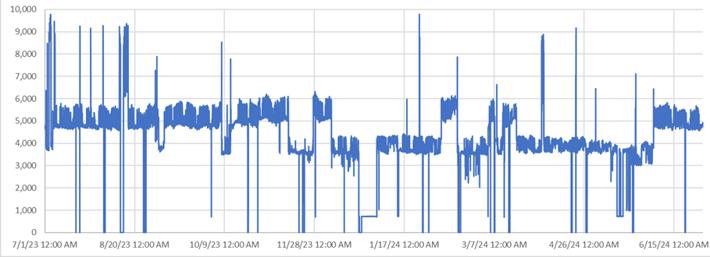
Symptoms may include:
- Inconsistent tool performance
- Slower production cycles
- Robotic positioning errors
- Increased scrap rates
- Excessive equipment wear
- Unexpected downtime
A properly engineered industrial compressed air system maintains stable pressure throughout the facility by balancing compressor capacity, air storage, piping design, and intelligent controls. Rather than simply installing a larger industrial air compressor, optimizing the complete system typically delivers better long-term performance and boosts overall manufacturing efficiency.
Energy Efficiency Is an Opportunity for Significant Cost Savings
Compressed air is one of the most expensive utilities in many manufacturing facilities, often accounting for a substantial portion of total electricity consumption. Improving manufacturing efficiency begins with evaluating the entire compressed air system rather than focusing solely on the compressor.
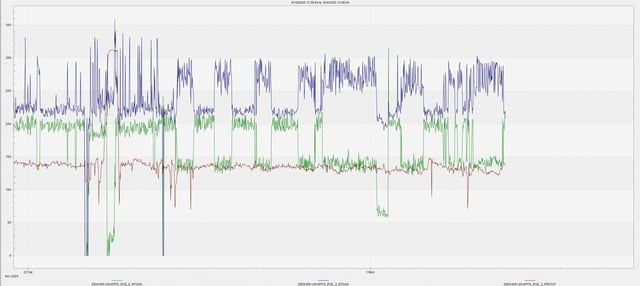
Common opportunities for optimization include:
Leak Detection and Repair: Even small air leaks can waste thousands of dollars in electricity each year while reducing available system capacity.
Optimized Compressor Controls: Modern controls coordinate multiple compressors to match production demand while minimizing unloaded run time and unnecessary energy consumption.
Proper Air Storage: Correctly sized receiver tanks stabilize pressure, reduce compressor cycling, and improve overall system efficiency.
Distribution System Improvements: Proper pipe sizing and system layout reduce pressure drop while ensuring compressed air reaches every production area efficiently.
How System Reliability Protects Production Uptime
Every minute of unexpected downtime affects production schedules, labor utilization, and customer deliveries. A comprehensive strategy for automotive compressed air systems includes:
- Preventive maintenance
- Condition monitoring
- Redundant equipment where appropriate
- Remote system monitoring
- Energy performance analysis
- Lifecycle service planning
These practices help maximize equipment reliability while reducing the risk of unplanned outages, ultimately supporting your plant's manufacturing efficiency.
Why Compressed Air System Design Matters
Many compressed air challenges originate outside the compressor itself. Issues such as oversized equipment, undersized piping, poor storage capacity, improper controls, inadequate air treatment, and distribution bottlenecks can all severely reduce system performance.
At Rasmussen Air & Gas Energy, we prioritize comprehensive compressed air system design to engineer complete solutions that align with each facility's unique production requirements. Our team evaluates system demand, air quality requirements, redundancy goals, energy performance, and lifecycle costs to design solutions that improve reliability while lowering the total cost of ownership.
Whether supporting a new manufacturing facility or optimizing an existing industrial compressed air system, our objective is to deliver dependable performance that keeps production moving efficiently while providing the exact air quality each application demands.
Selecting the Right Air Compressor Technology



Every manufacturing facility has unique operating requirements, making compressor selection only one part of the overall system design. Whether a facility uses rotary screw compressors or centrifugal air compressors, the complete compressed air system, including dryers, filtration, storage, controls, and distribution piping, must be engineered to consistently deliver the airflow, pressure, and ISO 8573-1 air quality classification required by the application.
Not every automotive application requires oil-free compressed air. However, for critical manufacturing processes where product quality cannot be compromised, Rasmussen Air & Gas Energy engineers systems capable of delivering ISO 8573-1 Class 0 oil-free air.
By eliminating the possibility of oil contamination at the source and integrating the appropriate dryers, filtration, and condensate management equipment, these systems provide the clean, dry air (CDA) needed for demanding applications such as paint booths, battery manufacturing, precision instrumentation, and leak testing. The result is greater process reliability, reduced risk of product defects, and confidence that the compressed air system supports both production quality and regulatory requirements.
Meeting an ISO 8573-1 target is not accomplished by the compressor alone. It requires a properly engineered industrial compressed air system that maintains air quality from the compressor room to the point of use, ensuring reliable performance throughout the manufacturing process.
Optimize Your Automotive Compressed Air Systems with Rasmussen Air & Gas Energy
Compressed air is far more than a utility; it is a critical component of automotive manufacturing performance. By investing in properly engineered automotive compressed air systems, manufacturers can improve product quality, increase equipment reliability, reduce energy consumption, and ensure the appropriate ISO 8573-1 air quality for every application.
If your facility is planning an expansion, replacing aging equipment, or looking to improve manufacturing efficiency, Rasmussen Air & Gas Energy can evaluate your compressed air infrastructure and develop a solution tailored to your production goals.
Schedule Your Compressed Air System Assessment
Contact Rasmussen Air & Gas Energy today to schedule an evaluation of your industrial compressed air system and discover opportunities to improve reliability, efficiency, and overall manufacturing performance.
Rasmussen Air and Gas Energy manufactures, rents, sells, and services industrial air compressor systems and compressed gas equipment. We support food and beverage, healthcare, manufacturing, agriculture, and other energy intensive industries with engineered compressed air system design, deployment, and lifecycle solutions that maximize productivity and manage flow for measurable financial performance.