When a Desiccant Dryer Is the Right Choice for Your Facility
Cold weather creates a harsh operating environment for your industrial compressed air system. When temperatures fall below freezing, moisture that is normally managed by dryers, separators, drains, and piping can quickly become a reliability problem. Exposed condensate lines can freeze. Water can accumulate where it should not. Intake conditions can change. Equipment located in unheated or partially heated areas may operate outside its intended environmental conditions.
The result is often more than a cold compressor room. A relatively small winter-related issue can restrict airflow, interfere with air treatment, damage components, or contribute to costly, unexpected interruption in production.
That is why industrial air compressor winterization should be approached as a comprehensive system reliability exercise rather than a single maintenance task. Before the first sustained freeze, it is critical to evaluate the compressor, air treatment equipment, drains, piping, ventilation, controls, and all areas where the system is exposed to outdoor temperatures.
The Impact of Cold Weather on Industrial Compressed Air Systems
Moisture is the primary reason winter conditions deserve special attention.
Ambient air naturally contains water vapor, and when that air is compressed and cooled, this vapor condenses into liquid. Industrial compressed air systems therefore rely on aftercoolers, moisture separators, dryers, filters, receivers, and condensate drains to control this moisture.
Rasmussen Air & Gas Energy technical training emphasizes that condensate must be removed as compressed air cools because retained moisture can contribute to corrosion, water carryover, and system damage. During winter, the consequences of poor industrial moisture management become highly severe. If liquid water reaches piping, drains, valves, or other components exposed to temperatures below 32°F, it can freeze and stop production.
A successful winter preparation plan starts with one critical question: Where can moisture exist in the system, and can any of those locations reach freezing temperatures?
Your Complete Winter Compressed Air Checklist
This pre-winter checklist is your guide for your essential compressed air system maintenance walk-through. Read on for a detailed breakdown of why each step is critical to your system's reliability.
→ Inspect compressors and complete scheduled preventive maintenance.
→ Test condensate drains throughout the system.
→ Verify dryer performance and required pressure dew point.
→ Inspect filters and review differential pressure.
→ Identify piping and drain lines exposed to freezing temperatures.
→ Check insulation and engineered freeze protection where required.
→ Inspect compressor room ventilation, louvers, dampers, and heating.
→ Protect outdoor air intakes from snow, ice, and moisture.
→ Review water cooled equipment for freeze exposure.
→ Inspect the system for compressed air leaks.
→ Verify alarms, sensors, controls, and remote monitoring.
→ Review backup capacity, rental connections, and emergency response plans.
→ Evaluate opportunities to recover compressor heat during winter.
How to Prepare Your Compressed Air System for Winter
1. Inspect Exposed Compressed Air Piping and Condensate Lines
Walk the compressed air system from the compressor room to the points of use and identify piping that passes through:
• Exterior walls
• Rooftops
• Loading areas
• Unheated warehouses
• Mechanical spaces
• Outdoor process areas
• Other locations exposed to freezing temperatures
Pay particular attention to low points and condensate drain lines.
Insulation may be appropriate for exposed piping, and some applications may require properly engineered heat tracing or other freeze protection. The correct solution depends on the piping configuration, environmental conditions, system pressure, air quality requirements, and applicable equipment specifications.
Do not assume that air leaving the dryer means downstream piping is automatically protected. The relationship between compressed air pressure dew point and the lowest temperature the air will experience downstream matters.
If piping becomes colder than the condition the drying system was designed to support, additional condensation can occur.
2. Test Every Condensate Drain
Condensate drains are easy to overlook because they are small components compared with the compressor or dryer. Their job, however, is critical.
Drains may be located in compressors, aftercoolers, moisture separators, air receivers, filters, fryers and low points in the distribution system. Before winter, verify that drains actually operate rather than simply confirming that they are installed. Look for blocked discharge lines, stuck valves, excessive air loss, damaged components, and evidence of water accumulation.
A failed drain can allow liquid to remain in the system, quickly becoming an operational disaster in freezing conditions.
Automatic drains should be inspected according to the manufacturer's recommendations, and timer-based drains should be checked to confirm settings are appropriate for actual condensate loads.
The objective is straightforward: remove condensate reliably without unnecessarily wasting compressed air.
3. Verify Dryer Performance and Pressure Dew Point
A dryer that appears to be running is not necessarily producing the required air quality.
Before winter, review your system's dryer operation and ask:
• Is the dryer achieving its specified pressure dew point?
• Are inlet temperature and flow within the dryer's design conditions?
• Are separators and drains working correctly?
• Are filters creating excessive pressure drop?
• Has preventive dryer maintenance been completed according to the manufacturer's requirements?
• Will downstream piping encounter temperatures lower than the system was designed for?
This last question becomes particularly important for piping routed outdoors or through unheated spaces.
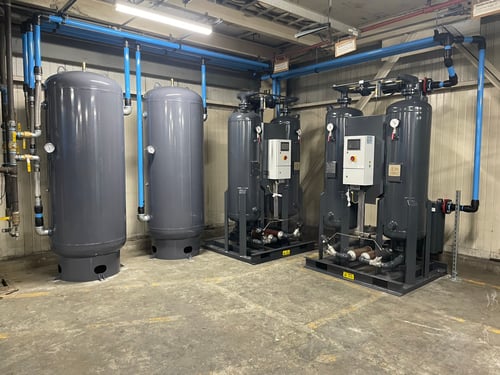
Refrigerated and desiccant dryers have different operating characteristics and capabilities. The correct dryer technology should be based on your specific air-quality requirements and the lowest temperatures the compressed air may experience.
For critical applications, before winter is a good time to verify whether the existing air treatment system remains appropriate for the facility's actual operating conditions.
4. Check Compressor Room Temperature and Ventilation
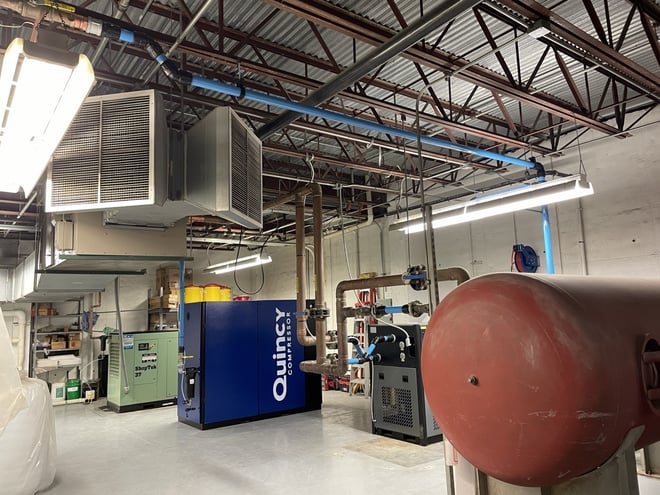
Winter ventilation can be a balancing act. Industrial compressors generate significant heat while operating, but a compressor room designed only around summer heat removal can behave very differently when outdoor temperatures fall.
Facilities should verify that ventilation louvers, dampers, exhaust systems, heaters, and thermostatic controls are operating correctly.
The objective is not simply to warm the compressor room, but to maintain the environmental conditions required by the equipment while still providing adequate cooling and ventilation. Review the manufacturer's minimum and maximum ambient temperature requirements for the compressor, dryer, drains, and associated equipment.
Also inspect outdoor air intake locations. Snow, ice, moisture, or drifting material should never be allowed to obstruct or enter industrial compressor intake systems, as this can severely affect airflow and damage internal components.
5. Inspect Filters and Watch for Excessive Pressure Drop
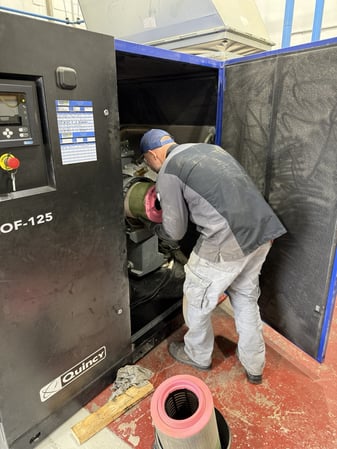
Winter preparation is also an ideal opportunity to inspect industrial compressed air filtration. Dirty or saturated filter elements can restrict airflow and increase pressure drop.
 The Department of Energy identifies several air treatment components as potential sources of significant supply side pressure drop when improperly selected or maintained:
-
Filters
-
Dryers
-
Moisture separators
-
Aftercoolers
-
Other air treatment equipment
That matters because compensating for excessive pressure drop by simply increasing compressor discharge pressure can drastically increase energy consumption and operational costs.
Inspect filter differential pressure and replace elements according to manufacturer specifications and their actual condition. A maintenance problem should always be corrected at the source rather than hidden by operating the entire compressed air system at a higher pressure.
6. Inspect Cooling Systems on Compressors
Water-cooled compressors and other equipment with liquid cooling circuits deserve specific attention before freezing weather arrives.
Verify that cooling systems are operating within manufacturer specifications and that any portion exposed to freezing temperatures has appropriate protection. For air compressors that may be shut down for extended periods, determine whether untreated water or condensate can remain trapped in coolers, piping, drains, or separators.
Shutdown equipment can be particularly vulnerable because the heat generated during normal operation is no longer present. Follow the equipment manufacturer's winterization and shutdown requirements rather than relying on the risky assumption that an idle compressor is protected.
7. Find and Repair Air Leaks Before Winter Demand Increases
Air leaks are an efficiency problem in every season, but a prewinter inspection is a practical time to address them. The U.S. Department of Energy notes that leaks can represent 20 to 30 percent of compressor output in poorly maintained systems. Beyond wasted energy, leaks can reduce system pressure and force compressor equipment to operate longer than necessary.
Inspect common leak locations across your facility, including:
-
Couplings and hoses
-
Fittings and pipe joints
-
Quick disconnects
-
Regulators and valves
-
Condensate traps
-
Point-of-use equipment
Small leaks can be difficult to detect in a noisy production environment. Ultrasonic or acoustic leak detection can help facilities identify costly losses that are not easily heard. Repairing leaks before winter can reduce unnecessary compressor loading while improving overall system reliability.
8. Review Compressor Heat Recovery Opportunities
The heat generated by an industrial air compressor is often treated as something that simply needs to be removed. During winter, it may also be an opportunity to lower utility costs.
Depending on compressor type, facility layout, and operating requirements, heated compressor cooling air may be redirected or recovered for useful facility heating applications. For example, some facilities can use compressor heat to supplement heating in warehouses, production areas, or other appropriate indoor spaces.
Heat recovery should be professionally engineered so that it does not compromise compressor cooling or create unwanted pressure restrictions in the ventilation system. A winter system review can help determine whether energy currently being rejected from the compressor room can serve a productive purpose elsewhere in the facility.
9. Review System Alarms, Controls, and Remote Monitoring
Mechanical inspections are only part of winter preparation. Review the system's available alarms, remote monitoring, sequencing controls, and temperature sensors.
Important conditions to track may include:
-
Low ambient temperature
-
High or low discharge temperature
-
High differential pressure
-
Drain failure
-
Dryer alarms
-
Abnormal pressure
-
Cooling system conditions
Confirm that alarms are functioning and that the appropriate personnel know how those alarms are communicated and escalated.
A warning that nobody sees until the next shift provides limited protection. For critical compressed air applications, monitoring can help maintenance teams identify changing conditions before they become production interruptions.
10. Plan for a Winter Compressed Air Failure Before It Happens
Even a well-maintained compressed air system can experience an unexpected failure. Before winter, determine how your facility would respond if a compressor, dryer, drain, or critical section of piping became unavailable.
Questions worth answering for your contingency plan include:
-
Is there adequate backup compressor capacity?
-
Can critical processes be isolated from noncritical demand?
-
Are rental connections already installed?
-
Does the facility know its required pressure, flow, and air quality?
-
Are emergency contacts documented?
-
Which components represent single points of failure?
-
Are critical spare parts readily available?
This is where winter preparation becomes more than preventive maintenance. It becomes proactive risk management. A compressed air system that supports production should have a recovery plan proportionate to the operational impact of losing air.
Winter Problems Can Reveal Larger System Issues
One of the most valuable outcomes of industrial air compressor winterization is identifying problems that are not actually seasonal. Routine winter failures often point to deeper infrastructure flaws:
- A frozen condensate line may reveal poor drainage design.
- Water downstream of a dryer may indicate that the dryer is not sized or operating for the actual application.
- Low pressure at production equipment may reveal clogged filters, leaks, inadequate piping, or insufficient storage.
- A compressor room that becomes difficult to control every winter may point to a ventilation design that does not adequately accommodate seasonal conditions.
Rather than treating every winter problem as an isolated repair, evaluate what the failure says about the compressed air system as a whole.
Taking a comprehensive systems approach can help improve reliability throughout the year.
Prepare Your Air System Before the First Freeze
The best time to discover a winter vulnerability is before freezing weather arrives.
Rasmussen Air & Gas Energy supports industrial compressed air systems throughout their lifecycle, including system design, air treatment, piping, controls, audits, preventive maintenance, repair, and engineered solutions.
A professional winter compressed air review can help identify vulnerabilities in moisture management, dryers, drains, filtration, exposed piping, controls, system efficiency, and backup planning before they affect production.
Don't wait for a freeze-related breakdown to stop your operations. Request a consultation with Rasmussen Air & Gas Energy today to review your compressed air system and prepare your facility for reliable winter operation.
Rasmussen Air and Gas Energy manufactures, rents, sells, and services industrial air compressor systems and compressed gas equipment. We support food and beverage, healthcare, manufacturing, agriculture, and other energy intensive industries with engineered compressed air system design, deployment, and lifecycle solutions that maximize productivity and manage flow for measurable financial performance.