How to Choose Between a Refrigerated and Desiccant Air Dryer
When an industrial air compressor breaks down, the effects can spread quickly through a facility. Production equipment loses pressure, automated processes come to a halt, and product quality may be put at risk. For businesses and operations that rely on compressed air as a critical utility, even a short interruption can become an expensive emergency.
The first priority should not automatically be restarting the air compressor. It must involve protecting employees, preventing additional damage and giving the service team the information needed to diagnose the problem quickly. Prioritizing a calm, organized response not only helps to shorten downtime but also supports a safe, reliable repair.
At Rasmussen Air and Gas Energy, we are often the first call businesses make when their industrial air compressor shuts down; we help facilities troubleshoot, repair and maintain their industrial compressed air systems every day. In this article, we'll highlight exactly what to do when your air compressor breaks down.
Steps to Follow When Your Compressed Air System Fails
Step 1. Make the Area Safe
When a compressor breaks down, your first priority is protecting employees and preventing additional equipment damage, and the first step to doing this is making the site safe.
Identify Any Immediate Hazards
If the air compressor is smoking, arcing, leaking oil, producing a burning smell or making severe mechanical noise, keep employees away and follow your facility's emergency procedures.
Follow Emergency Protocols
Follow your facility's emergency procedures, use the approved shutdown process if conditions require it, and contact the appropriate site safety personnel.
It's important not to remove any guards, open electrical panels or begin hands-on troubleshooting while the equipment is energized or pressurized. Before inspection or repair, authorized personnel should follow the facility's lockout/tagout procedures and isolate all applicable energy sources, including electrical power and stored pneumatic pressure.
Always follow the equipment manufacturer's instructions and your site-specific safety program during a compressed air equipment failure.
Step 2. Check the Rest of the Compressed Air System
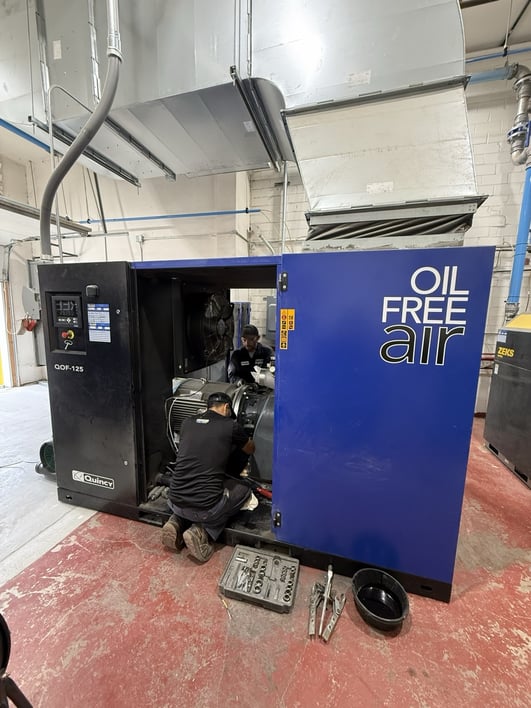
A loss of plant pressure does not always mean the compressor itself has failed. The issue may involve other system components such as a dryer, filter, drain, controller, valve, electrical supply or part of the distribution system.
Assess the Outage
From a safe location, determine whether just one air compressor or the entire compressor room is offline. Check whether the compressor stopped completely or is running without building pressure. Note if the pressure is low throughout the entire plant or only at certain points of use.
This information can help the service technician narrow down the cause before arriving onsite.
What Not to Do: Avoid increasing the compressor's discharge pressure simply to compensate for low pressure elsewhere. That can increase energy use and equipment stress without correcting the underlying restriction, leak or control problem.
Want expert support now instead?
Request emergency repair service today.
Step 3. Record What Happened Before Resetting the Compressor
Alarm history and operating data often provide the fastest path to the root cause of a breakdown.
Before an authorized person clears the controller, carefully document the following:
System Data: Record the alarm code, time of the failure, system pressure and operating temperature.
System Conditions: Note any unusual noises, vibration, odors, heat or visible leaks. If it is safe, take photos of the controller display and equipment's overall condition.
System Details: The service provider will also need the compressor manufacturer, model and serial number, along with details about recent maintenance, production changes or power interruptions.
What Not To Do: Avoid repeatedly resetting a compressor that continues to shut down. Protective shutdowns are designed specifically to limit damage; repeated restarts can make problems even worse and may erase valuable diagnostic information from the system.
Step 4. Activate Your Facility's Backup Plan
If your facility has a standby compressor, bring it online according to the approved operating procedure. Confirm that all valves, controls, dryers and other air-treatment equipment are configured correctly before placing the backup unit under load.
In facilities that can't afford downtime, we recommend using a redundancy system that automatically switches over if there's ever a compressor failure. This additional protection commonly designs compressed air systems around N+1 or 2N configurations to prevent interruptions and keep production continuous.
Time-sensitive production lines, such as food and beverage or pharmaceutical packaging companies, could lose entire batches with even a 5-minute interruption. Creating a redundant compressor setup is one of the best ways to prevent downtime if anything happens.
If backup capacity is limited, reduce nonessential compressed air demand where practical. Operations and maintenance teams may be able to isolate major leaks, shut off noncritical uses, or prioritize the processes most important to safety and production.
Some breakdowns require a temporary rental compressor while the primary unit is repaired. This temporary equipment must be properly sized for the required airflow, pressure and air quality. It must also be safely integrated with the facility's electrical supply, ventilation and piping. A compressed air professional, such as Rasmussen Air and Gas Energy, can help determine the correct temporary solution.
Step 5. Call an Emergency Air Compressor Service Provider
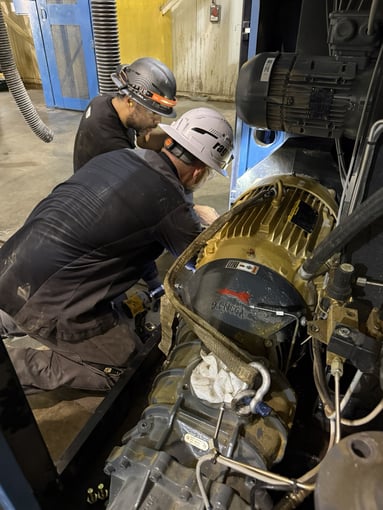
Once you've controlled immediate hazards, contact a qualified industrial air compressor repair provider. At Rasmussen Air & Gas Energy, we offer 24/7 emergency air compressor service and support for all major compressor brands.
When requesting service, provide the facility address, site contact, compressor information and alarm codes.
Be prepared to explain:
- How the breakdown is affecting production
- Whether backup equipment is running
- What system pressure the facility requires
Providing complete information helps the technician prepare the right tools, parts and support plan before arriving.
The visible failure is not always the root cause. For example, a high-temperature shutdown could be caused by a dirty cooler, restricted ventilation, a failed fan, a lubrication issue or excessive operating demand. A qualified technician can evaluate the air compressor and the surrounding system to determine why the shutdown occurred, not just which component failed.
After repairs, return the compressor to service through a controlled startup. Pressure, temperature, vibration, loading behavior and air quality should all be monitored to confirm that the system is stable before normal production resumes.
How to Prevent Future System Failures
One of the best ways to prevent future system failures is utilizing a redundant air compressor system to ensure there's always a backup. If that's not feasible, knowing where to get a spare compressor in times of need or and knowing who to call in emergencies is crucial.
Another source of prevention is determining the initial cause of the system failure. Once your compressed air system is back online and production is restored, document the failure and review what could reduce the chance of it happening again. Consider whether warning signs appeared before the shutdown, whether maintenance intervals need to change and whether critical spare parts should be kept onsite. It is also highly recommended to review how well the backup equipment and internal communication plan worked during the event.
Lastly, a preventive maintenance plan can help identify developing problems before they interrupt production. Facilities with critical compressed air demand may also benefit from remote monitoring, a dedicated backup compressor or a documented rental contingency plan.
Air Compressor Failure Frequently Asked Questions
Should I restart an air compressor after it shuts down?
Do not automatically reset or restart the system. First review the alarm, follow the manufacturer's instructions and confirm that no unsafe condition is present. If the cause is unknown or the unit shuts down again, leave it offline and contact a qualified technician.
What if the compressor cannot be repaired immediately?
A rental compressor may provide temporary air while repairs are completed. The rental must be sized and connected correctly for the facility's flow, pressure and air-quality requirements.
How can we prepare for a compressed air system emergency?
Maintain an up-to-date service contact list, equipment inventory, critical spare-parts list and documented shutdown and backup procedures. Test the plan periodically and update it whenever equipment or production requirements change.
Need Emergency Air Compressor Service?
When compressed air production stops, every minute matters. Rasmussen Air & Gas Energy provides 24/7 emergency, on-call support, access to an extensive parts network and service for all major compressor brands. Our team can diagnose the problem and help determine the safest, fastest path back to reliable operation.
Reach out today for fast, reliable compressed air service and repairs.
Rasmussen Air and Gas Energy manufactures, rents, sells, and services industrial air compressor systems and compressed gas equipment. We support food and beverage, healthcare, manufacturing, agriculture, and other energy intensive industries with engineered compressed air system design, deployment, and lifecycle solutions that maximize productivity and manage flow for measurable financial performance.