What to Do When Your Industrial Air Compressor Breaks Down
Finding water in your compressed air lines is frustrating, especially when your compressed air system already has an air dryer. Moisture downstream can cause a myriad of problems, including corrosion, damage to pneumatic equipment, reduced product quality and contribute to unplanned downtime.
Often, the immediate assumption is that the dryer has failed. Sometimes it has, but the dryer is only one part of the moisture-control process. The real cause may begin before the dryer, stemming from operating conditions that exceed its capacity or a dew point that doesn't match the application.
3 Reasons Why Water Is Getting Past Your Compressed Air System's Dryer
Here are three common reasons water may still be appearing downstream of your industrial air dryer.
1. The Dryer Is Handling More Moisture Than It Was Sized For
An air dryer’s rated flow is based on specific inlet temperature, operating pressure and ambient conditions. If actual plant conditions are more demanding, the dryer’s effective capacity can be significantly lower than the number shown on its nameplate.
Common causes that overload a compressed air dryer include:
High Inlet Temperature
Hot compressed air can carry more water vapor, which increases the moisture load entering the dryer. If the compressor aftercooler is dirty, undersized or not operating correctly, the dryer may receive air that is much hotter than expected.
Excessive Airflow
If your facility has added additional air compressors, production equipment, or extra shifts since the dryer was installed, the airflow may now exceed the air dryer's corrected capacity. When this happens, air moves through the dryer too quickly to reach the intended pressure dew point.
Environmental Changes
High ambient temperatures, changes in operating pressure and seasonal humidity can further reduce performance. This is why moisture problems often appear during hot, humid weather or after a facility increases production.
The solution is not always a larger dryer. A compressed air professional should compare actual inlet temperature, pressure, flow, ambient conditions and required dew point with the manufacturer’s performance data. The evaluation may reveal if the moisture in your air lines is being caused by a sizing issue, an aftercooler problem, a temporary demand spike or something else entirely.
Reach out to the air experts at Rasmussen Air and Gas Energy for an evaluation of your compressed air system.
2. Condensate Is Not Being Removed Before or Inside the Dryer
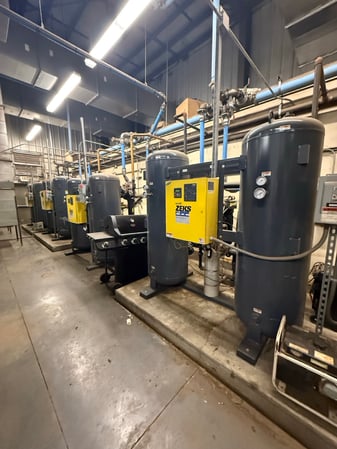
Industrial air dryers are designed to remove water vapor, but the compressed air system still must eliminate most bulk liquid water before it reaches the dryer. The aftercooler lowers the temperature of compressed air so moisture condenses. A moisture separator and automatic drain then remove that liquid from the air stream.
 Faulty Aftercoolers and Separators
If an aftercooler or separator is not working properly, liquid water can be carried into the dryer. That extra load can overwhelm the unit and send moisture downstream.
Drain Issues
Receiver drains, filter drains or the dryer’s internal separator drain can also fail, become clogged or be accidentally isolated. Drain problems are easy to overlook because the compressor and dryer may continue running without a clear alarm. However, a failed drain can allow a surprising amount of water to accumulate and move through the system.
Inspecting the entire condensate path is essential. A technician should confirm that the aftercooler is removing heat, separators are functioning, and every automatic drain is discharging correctly. The dryer’s condenser, heat exchangers, filters and refrigeration circuit should also be checked as part of routine air treatment maintenance.
When troubleshooting, do not bypass drains or open pressurized components. Always follow the manufacturer’s instructions and your facility’s lockout/tagout procedures, and have qualified personnel service the equipment.
3. The Dryer’s Dew Point Does Not Match the Application
Sometimes your dryer is operating exactly as designed, but the air is still not dry enough for conditions farther downstream. The key measurement here is the pressure dew point—the temperature at which water vapor begins to condense while the air is under pressure.
Cold Environments
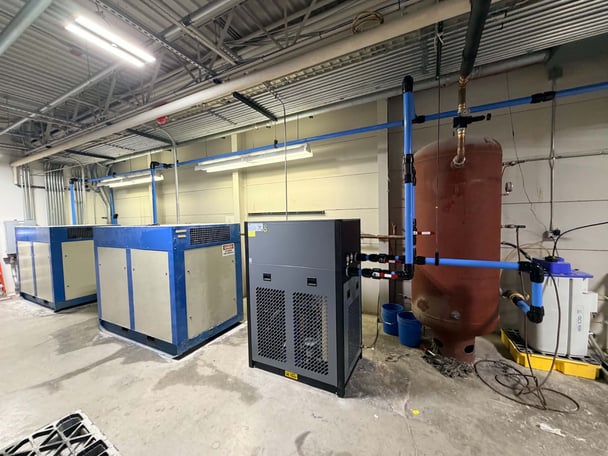
A refrigerated air dryer is commonly used for general indoor plant air. Refrigerated air dryers cool compressed air, remove the resulting condensate and provide a pressure dew point that is appropriate for many manufacturing environments. However, if piping travels outdoors, through an unheated warehouse or into any area colder than the dryer’s pressure dew point, the remaining water vapor can condense in the distribution system.
In that situation, the water did not necessarily “get past” a failed dryer. It condensed after the dried air reached a colder part of the plant.
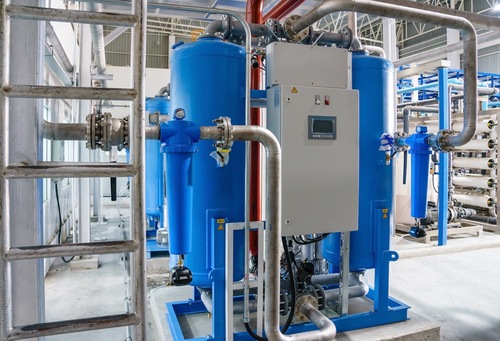
Applications with outdoor piping, freezing conditions or strict air-quality requirements may need a lower pressure dew point than a refrigerated dryer can provide. A properly selected desiccant dryer can achieve much drier air for those conditions.
Learn more about the role of refrigerated dryers in RAGE’s article: Why Refrigerated Air Dryers Are Essential to Your Compressed Air System
How to Find the Source of the Water
The location of the first visible moisture provides an important diagnostic clue.
Water immediately after the dryer may point to a drain, overload or internal performance issue. Moisture that appears only in a cold area of the plant may indicate a pressure-dew-point mismatch. Water near one machine could result from local piping, a low point or a problem at that specific point of use.
The system should also be inspected for an open or leaking bypass valve. Even a properly operating air dryer cannot protect your system and downstream equipment if untreated air is flowing around it and mixing with the dry outlet air.
A complete evaluation should verify dryer inlet and outlet conditions, pressure dew point, airflow, aftercooler performance, condensate drains, filters, bypass valves and downstream temperatures. Looking at the entire air treatment and filtration system is more reliable than replacing individual parts based only on where water was discovered.
Frequently Asked Questions
Does water downstream always mean the dryer has failed?
No. The dryer may be overloaded, bulk condensate may not be draining correctly or moisture may be condensing after the air reaches colder piping. Testing the pressure dew point and inspecting the complete system can separate a dryer failure from an application or drainage issue.
Can a compressed air filter remove the remaining water vapor?
Filters can remove liquid droplets, oil aerosols and particulates, but they do not reduce water vapor to a defined pressure dew point. That is the dryer’s job. Both drying and filtration are often necessary to achieve the required air quality.
Should we replace a refrigerated dryer with a desiccant dryer?
Not automatically. A desiccant dryer may be appropriate when the application requires a much lower pressure dew point, but the existing problem could be caused by a failed drain, high inlet temperature or excessive flow. Confirm the actual operating conditions before selecting new equipment.
Stop Moisture Before It Reaches Your Process
Water downstream of an air dryer is a system problem that deserves a system-wide diagnosis. Rasmussen Air & Gas Energy can evaluate your dryer, aftercooler, filtration, condensate management and distribution conditions to identify the true cause and make practical recommendations for the right corrective action for your specific system and operation.
Request a consultation with Rasmussen Air & Gas Energy to evaluate your compressed air system.
Rasmussen Air and Gas Energy manufactures, rents, sells, and services industrial air compressor systems and compressed gas equipment. We support food and beverage, healthcare, manufacturing, agriculture, and other energy intensive industries with engineered compressed air system design, deployment, and lifecycle solutions that maximize productivity and manage flow for measurable financial performance.