3 Reasons Water Is Bypassing Your Compressed Air System Dryer
Compressed air is essential to many industrial operations, but it is easy to underestimate what it costs to produce and deliver. While you may check the electric bill to gauge your utility costs, that's only part of the picture. Day after day, unnoticed inefficiencies, like air leaks, pressure problems, poor control, unnecessary uses, and deferred maintenance, can quietly increase energy use, strain equipment, and put production at risk.
By taking a closer, comprehensive look at your entire compressed air system, plant managers and maintenance teams can finally uncover these hidden drains on profitability and make strategic improvements that last.
Uncovering Compressed Air System Inefficiencies Impacting Your Bottom Line
A compressed air system has several moving parts, and even small issues can affect overall performance and operating costs. Understanding where inefficiencies occur is the first step toward identifying opportunities to save. Here are some of the most common areas where energy waste and unnecessary costs can add up:
1. Air Leaks That Never Take a Break
A small leak may sound harmless, especially in a busy plant. Across a system, though, leaks can add up to a significant share of compressor output. The U.S. Department of Energy notes that leaks can waste 20% to 30% of a compressor’s output in some systems. That wasted air still has to be generated, dried, and filtered, even though it never supports production.
Leaks can also contribute to pressure fluctuations and extra compressor cycling or run time. Some of the most common sources of air leaks come from fittings, hoses, drains, valves, quick-connects, and older piping.
Cost Reduction Solution: Schedule Regular Inspections
Set up a regular leak detection and repair program. Document leak locations, prioritize repairs by size and operating hours, and recheck repaired areas. After air leaks are fixed, review compressor controls and system pressure so the equipment can respond to the lower demand.
2. More Pressure Than the Job Requires
It can be tempting to raise system pressure when equipment at the far end of the plant is not performing well. But increasing pressure across the whole compressed air system to solve a local issue can make every compressor work harder. It may also increase leakage and wear without fixing the root cause, such as undersized piping, a clogged filter, or a poorly configured regulator.
Cost Reduction Solution: Check Pressure Requirements & Airflow
Confirm the pressure required by each application, then measure pressure at the compressor and at critical points of use during normal production. Look for pressure drop through filters, dryers, piping, and treatment equipment. Address the restriction or distribution problem before raising the overall setpoint. Lower system pressure only in a controlled way and verify that production equipment still performs reliably.
3. Pressure Drop and Poor Air Distribution
Compressed air has to travel from the compressor room to the point of use. Long or undersized piping, unnecessary bends, dirty filters, and restrictive components can create pressure drop. The result may be that operators see weak performance at a machine even though the compressor room pressure looks adequate.
The hidden cost is often a cycle of workarounds: raising header pressure, adding capacity, or accepting inconsistent tool and process performance.
Cost Reduction Solution: Assess Pressure and System Capacity
Measure pressure where the air is used, not just at the compressor. Inspect air filters and air treatment components, and review pipe sizing and layout where pressure loss is significant. A compressed air system assessment can help distinguish a supply-capacity problem from a distribution problem.
4. Using Compressed Air Where It Isn't Needed
Compressed air is convenient, so it can become the default for cleaning, cooling, agitation, or other low-pressure tasks. Those uses may consume large volumes without improving the process. In some cases, a blower, fan, electric device, or a different process method may do the job more efficiently.
Cost Reduction Solution: Assess Air Use Across the Facility
Walk the plant and identify all the places where compressed air is being used. Ask whether the application requires compressed air, whether it runs continuously, and whether the pressure and flow are appropriate. Prioritize high-volume or continuous uses for review. Keep essential safety and process requirements in view when evaluating alternatives.
Related Article: The Hidden Cost of Intermittent Compressed Air Demand in Manufacturing
5. Compressor Controls and Equipment That Aren't Properly Matched
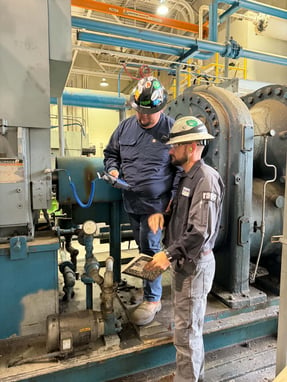 A system with multiple compressors needs controls that match supply to changing demand. If compressors spend too much time unloaded, cycle excessively, or operate in an inefficient combination, the plant may pay for power that produces little useful air. Aging or improperly maintained equipment can add to the problem.
Adding another compressor may seem like the simplest answer to low pressure, but it can increase energy and maintenance costs if the actual issue is leaks, storage, controls, or piping.
Cost Reduction Solution: Analyze Compressor Loading and Demand
Review compressor loading patterns and demand over time, including nights, weekends, and production changes. Check whether sequencing and storage are appropriate for the air demand profile. Before expanding capacity, evaluate the full system and confirm the source of the shortfall.
6. Maintenance Issues That Drive Up Operating Costs
Dirty inlet filters, neglected drains, worn components, and overdue service can reduce performance or affect air quality. A problem that begins as a maintenance item may become higher energy use, unplanned downtime, product quality concerns, or damage to downstream equipment.
Cost Reduction Solution: Keep Up With Maintenance and Service Records
Follow manufacturer maintenance requirements and track service history. Pay attention to differential pressure across filters, condensate management, air dryer performance, and changes in compressor operating behavior. Investigate recurring alarms, temperature changes, air pressure instability, or moisture at the point of use rather than treating each symptom in isolation.
Find out the 5 Signs Your Compressed Air System Is About to Fail
A System-Wide Approach to Reducing Compressed Air Costs
The best opportunities are often connected. Repairing compressed air leaks can reduce demand, but realizing the full benefit may also require adjusting controls. Lowering pressure can save energy, but only after pressure drop and point-of-use requirements are understood. Replacing equipment may help, but only if it addresses the actual system constraint.
Start by establishing a baseline: record operating pressure, compressor run and load time, production schedules, air quality requirements, and known problem areas. Then prioritize improvements by their effect on energy use, reliability, maintenance, and production.
Partner with Rasmussen Air & Gas Energy for Optimal Compressed Air System Performance
Rasmussen Air & Gas Energy helps industrial facilities evaluate compressed air systems, identify sources of waste, and determine practical next steps.
Request a Consultation to discuss your system and where hidden costs may be adding up.
Rasmussen Air and Gas Energy manufactures, rents, sells, and services industrial air compressor systems and compressed gas equipment. We support food and beverage, healthcare, manufacturing, agriculture, and other energy intensive industries with engineered compressed air system design, deployment, and lifecycle solutions that maximize productivity and manage flow for measurable financial performance.